Search options
Cancel
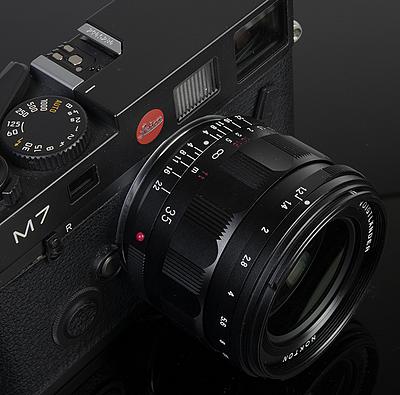 With the current atmosphere in the Leica community, largely dominated by the fever pitch surrounding the new 35mm Noctilux, I felt compelled to write up this short review of the Voigtlander 35mm f/1.2 IV.
Before we dive into the images, let’s clear the air. In the wake of the Leica 35mm Noctilux announcement, I’ve seen a wave of comments jumping to conclusions without having seen a single side by side comparison. To be absolutely clear, this is not a comparison between the Leica and the Voigtlander. I am not here to declare one better than the other or to crown a winner in a spec sheet war.
Instead, this is a re-evaluation of a modern classic. The Voigtlander 35mm f/1.2 Nokton has been a staple in the M mount world for years, and with the release of the Version 4 (IV), it’s time to look at it through a 2026 lens.
The goal of this review is to determine if its current rendering, its signature wide open character, and its mechanical integrity are good enough to play in the same arena as the newest flagship glass from Leica.
In fact, the only thing that can be determined as an absolute fact when comparing these two lenses right now is the price point. One carries a staggering five figure premium the other offers world class performance for a fraction of that.
I am not chasing the red dot or the luxury badge here, I am chasing the image. Every photo in this review was shot wide open at f/1.2 to see if this lens can still hold its own as a bokeh master in the modern era. If you’re here for the bling, you’re in the wrong place. If you’re here for the rendering, let’s begin.
With that said ....
The Leica world was recently set ablaze by the announcement of the Noctilux M 35mm f/1.2 ASPH. At a staggering $9,650.00, it represents the absolute pinnacle of Leica’s optical prestige, a dream lens by every definition. However, while the Noctilux will undoubtedly be an incredible piece of glass for those who can swing the investment, most of us live in a world where performance must be weighed against price.
Retailing for around $1,100.00, this lens sits at a fraction of the Leica's cost, yet it isn't playing for second place. The core of this review isn't about finding a budget alternative, it’s an exploration of a lens that is extremely well built, meticulously controlled and capable of producing exceptional contrast along with a beautiful rendering which is undenaibly a bokeh champion.
One point to address upfront, the spec sheet obsession with f/1.2 over f/1.4. In real world shooting, the difference in bokeh rendering between f/1.2 and f/1.4 is practically undiscernible. What truly matters and what I will focus on here, is the rendering and character this lens brings to the frame, proving that you don’t need to spend five figures to achieve a world class look.
I recently posted a review of the Zeiss ZM 35mm F1.4 Distagon HERE where most people were critical about it's weight rather than performance. Having said that, keep the following in mind when looking at the Noctilux and the Nokton.
One of the most significant triumphs of the Voigtlander version 4 ( IV ) is its weight. At approximately 300g, the Version 4 has undergone a massive diet compared to its predecessors and even manages to undercut the new Leica Noctilux (416g). This weight reduction transforms the lens from a heavy specialty tool into a viable everyday carry. You get the light gathering power of a Noctilux class lens without the neck strain, making it arguably more practical for the rangefinder photographer. All thge Leica fanboys who complained about the Zeiss being heavy even though it produced better images than the Summilux FLE, remember what you said then. Because the same applie now to Voigtlander / Noctilux.
There is a common obsession in gear forums with the extra half stop of light. However, from a purely aesthetic standpoint, the difference in bokeh rendering between f/1.2 and f/1.4 is practically undiscernible to the naked eye. If you were to do a side by side blind test, most viewers would be unable to tell which frame had the slightly larger aperture.
To clarify the "f/1.4 vs. f/1.2" debate even further, the difference in bokeh is actually less discernable at close distances than it is at long distances.
At close range, when you are shooting at the minimum focus distance, the background is already a total wash. Whether you are at f/1.4 or f/1.2, the subject isolation is so extreme that the extra half stop provides no meaningful visual change.
At greater distances, it is only when your subject is further away, say, a full body portrait at 9 or 15 feet, that the slight increase in blur from an f/1.2 aperture becomes even remotely visible
Unless you are shooting wide open environmental portraits at a distance, chasing f/1.2 for the extra blur is a game of diminishing returns. The real reason to shoot this lens wide open isn't for a quantity of blur that you can't get at f/1.4, it’s for the specific rendering and character that this smooth operator brings to the entire frame.


Support purerangefinder.com — Our community is free for everyone. If you value what we do, you can help cover our server and development costs with a small one time or monthly donation.


This image, captured at f/1.2, serves as a compelling testament to the Voigtlander's modern optical design. While there are numerous samples and reviews of the new Leica 35mm Noctilux f/1.2 available online, this lens holds its own with a rendering that is arguably more practical for daily use.
The clarity in this frame is immediately apparent. Even wide open at its maximum aperture, the center of the image remains tack sharp. While many ultra fast lenses of the past suffered from a dreamy haze or heavy spherical aberration at f/1.2, the Version 4 Nokton utilizes four aspherical surfaces to effectively correct these issues. The result is a crisp subject that stands out with high contrast, proving that you don't need to stop down to f/2 just to get usable detail.
The bokeh here is where the Voigtlander really shines. With its 12 blade rounded iris, the out of focus areas are rendered with a buttery smoothness that lacks any harsh edges or nervous textures often found in high performance glass.
The fall off from the plane of focus into the background is gradual and natural, creating a cinematic sense of depth.
Specular highlights remain pleasingly round across most of the frame, providing that Noctilux esque look without the heavy vignetting that sometimes causes extreme cat’s eye bokeh in other designs.
The overall rendering can be described as modern with a bit of sould. It captures the environment with exceptional contrast and color saturation, avoiding the clinical, flat look of some contemporary lenses. There is a noticeable 3D pop to the subject.
While online samples of the $9,650 Leica Noctilux highlight its velvety soft bokeh and atmospheric signature, the images from this $1,100 Voigtlander offer a level of performance that makes the massive price gap difficult to justify for pure image quality alone.
The transition to black and white reveals the true structural strength of the Voigtlander. When you strip away the color, you are left with a sophisticated map of gray tones that highlights the lens’s exceptional light transmission and micro contrast.
In this monochrome rendering, notice how the lens handles the subtle gradations on the metal structures and the soft roll off in the background. The highlights from the overhead lights are contained beautifully, while the deep shadows retain enough detail to provide a sense of place. It produces a classic, high end Leica look where the subject almost feels embossed against the background.
I like repeating this in my writings. But, I believe it is so true that I feel I really need to drive it home. There is a persistent belief in the rangefinder community that you need a dedicated monochrome sensor to achieve this level of tonal depth. This image proves otherwise. You don't need a $9,000 monochrome body to get desireable results. You simply need ...
The Nokton provides the raw optical data the contrast and sharpness that serves as the foundation.
By using a well crafted preset in DXO PhotoLab or Adobe Lightroom, you can manipulate the color channels to create a black and white image that is indistinguishable from one shot on a dedicated mono sensor.
The Voigtlander’s ability to maintain separation between similar shades of gray gives you immense flexibility in post processing. It confirms that the combination of a well built lens and a smart workflow is far more valuable than chasing the most expensive niche hardware.
When capturing this portrait of my trusty model, Freya, the performance of the lens at its minimum focus distance became the centerpiece of my observations.
One of the most impressive technical feats of ths Nokton alonmg with the Noctilux is its 0.5m minimum focus distance. While the rangefinder is only coupled down to 0.7m, the lens continues to focus an additional 20cm, allowing for detail oriented shots that were previously difficult to achieve with fast M mount glass.
Note: The newer 50mm Summilux does offer close focus capabilities as well.
To nail the focus on Freya’s eye at such a razor thin depth of field, I utilized the Visoflex 2 EVF. Using the electronic viewfinder is essential here, it allowed me to bypass the rangefinder's physical limitations and see exactly where the focus falls in real time. The result is a level of precision that makes the 1.2 aperture usable even at its closest range, capturing the fine texture of her fur and the clarity of Freya's eye with startling sharpness. Not bad for a lens $8500.00 less than it's Leica counterpart.
Note: Who needs an EV1 when you can just throw the Visoflex on your M11
While we can look at the specs of the new Leica 35mm Noctilux which also features a 0.5m close focus limit, there is currently a lack of real world evidence for its performance at this extreme. I have yet to find eye samples onthe net. I just need to give it more time. Beleive me, I have scoured the available online samples, and while there are beautiful atmospheric shots, nothing yet shows a true macro style closeup of an eye at 0.5m from the Noctilux.
Without these samples, it is impossible to say if the Leica can maintain the same biting contrast and detail at its minimum focus distance that the Voigtlander shows here. But to be honest, I can only assume it will. Afterall, Leica's name and price for their Noctilux needs to be justifyable. So, If you know where I can find some of these samples please share the info with me.
So at this point, The Voigtlander isn't just a budget alternative in this category, it is currently the proven choice bokeh and close up performance until we see more from the Leica camp.
Once again, while the color performance of the Nokton version IV is modern and vibrant, stripping away the color emphasizes the exceptional contrast and the gray tones the lens is capable of producing.
The color rendering in this shot of the apples is a perfect example of the modern classic balance this lens achieves. It manages to deliver vibrant, saturated colors that pop without feeling artificial or overly clinical.
Notice how the reds and greens are rich and deep, yet the lens maintains enough contrast to show the fine texture of the water droplets and the subtle skin variations on each fruit. The transition from the sharpest point of focus to the soft roll off in the bins is smooth, giving the image a 3D quality that is a hallmark of high end glass.
Even wide open at 1.2, the color accuracy remains remarkably stable across the frame. There is very little of the color fringing or bleeding that often plagues ultra fast lenses in high contrast scenarios.
While the performance of the Voigtlander 35mm 1.2 Nokton Version IV has been largely impressive, no review is complete without a critical look at the challenges. In this shot of the apples, for instance, the results felt a bit underwhelming despite the focus being placed directly on the black label.
At an ultra fast 1.2 aperture, the depth of field is razor thin. When working at such close distances, even a slight shift in focus perhaps caused by the separation between the apples or a subtle move after locking on can lead to an image that doesn't quite meet my expectations.
Despite looking fine at first glance, the image lacks the biting clarity seen in other samples. It looks a bit smooth without texture. This could be due to the lens's extreme shallow depth of field or potential focus shift, a known quirk in fast lenses.
It is important to remember that this is only a first run. One underwhelming shot doesn't define a lens, but it does highlight the need for further evaluation to determine if this was a user error in managing the apple separations or a genuine limitation of the lens's optical design at its widest aperture.
Are my expectations just too high? I want to see that Zeiss Distagon 1.4 ZM clinical results in any lens I aquire. You could say that the Zeiss has simply set the standard for everything else. Not even the Summilux FLE can best it.
Moving away from the previous examples, we turn to this shot of a faux pink flower. This image provides a different canvas for the lens, and once again, the bokeh smoothness is undeniably beautiful.
In this shot, the 35mm Nokton demonstrates its ability to handle artificial textures with a level of grace that makes them feel almost organic.
The way the focus rolls off the petals into the background is buttery and refined. The colors are rendered with a pleasing saturation that gives the pink hues a vibrant, life like pop without appearing digital or over sharpened. Even wide open, the lens maintains high contrast on the fine edges of the flower.
Despite being a fraction of the price of the $9,650 Noctilux, Which I still find difficult to accept, this image holds its own against any of the official or community shared samples I’ve seen of the Leica glass online. While the Leica is celebrated for its rendering, the Voigtlander provides a nearly identical rendering of out of focus highlights and tonal transitions.
In this busy interior scene, the focus was placed directly on the two figures right smack in the middle of the frame. Once again, shooting wide open at 1.2 highlights the specific character of this Lens.
It is important to be realistic about the rendering here. While this image doesn't quite reach the clinical, razor edge technical perfection you might expect from a Zeiss Distagon known for its flat field and extreme corner to corner correction, the 1.2 performance isn't bad at all.
The central figures retain good definition and contrast, allowing them to pop against the complex, colorful background. Unlike the Zeiss, which often feels very modern and corrected, the Nokton maintains a slightly softer, more atmospheric fall off that feels right at home on an M body. Do not take this terminology as an excuse for a softer image or inferior image to the Distagon, This is simpy a limitation of super fast lenses.
Once again, the bokeh smoothness is beautiful. The myriad of lights and shelves in the background are transformed into a soft, wash of colors that doesn't distract from the primary subject.
Nailing the focus on those specific central figures amidst such a cluttered environment was made possible by using the Visoflex viewfinder. At 0.5m, even the slightest tilt would have thrown those dolls out of focus, but the EVF allowed for the precision needed to prove that this lens can handle complex scenes wide open.
This image further cements the idea that while this lens may not be a technical instrument in the way a Distagon is, its rendering and character provide a alternative that holds its own against the far more expensive Noctilux samples seen online.
Shooting at night with an f/1.2 lens is an exercise in freedom. While other photographers might be reaching for a tripod or cranking their ISO to noisy levels, thid Nokton 1.2 allows you to keep your shutter speeds up and your images clean.
It handles the high contrast challenge of bright lights against a dark sky with incredible poise and minimal flare. While it may not have the clinical, corrected feel of a Zeiss Distagon, it offers a moody, atmospheric rendering that feels far more aligned with the Leica Noctilux aesthetic. In the dark, the $8,500 price gap between this and the Leica feels narrower than ever, as the results speak for themselves.
This lens continues to prove itself as a smooth operator in every sense of the word. In this latest shot, the out of focus areas are rendered with a buttery smoothness that feels refined and effortless. Again, the bokeh smoothness is beautiful, ensuring that even the most complex backgrounds are transformed into a soft, painterly wash. This rendering reinforces its status of delivering beautiful bokeh.
There There is just something about black and white that I love, even at night, it has a way of making a scene look incredibly attractive. In this monochrome shot of the "Nest" storefront, the 35mm 1.2 proves that color isn't a requirement for a compelling image.
When you strip away the neon and tungsten hues of a night scene, you are left with a raw study in light and shadow.
Notice how the lens captures the subtle textures of the distressed wooden bench and the reflections in the window panes. The contrast is punchy but controlled, preventing the deep blacks from swallowing the fine details of the shop interior.
The string of lights along the roofline creates a lead in for the eye. Once again, the bokeh smoothness is very pleasant; those out of focus highlights are rendered as soft, gentle glows rather than harsh, distracting spots.
Shooting at 1.2 in the dark gives you the freedom to capture these quiet moments with enough light to keep the grain, or digital noise at bay. This rendering holds its own against any of the high end Noctilux samples I've seen online, showing that the Voigtlander's combination of build quality and optical design is a match for any environment, day or night.
In the end, the Voigtlander 35mm f/1.2 Nokton IV is a lens that demands to be judged on its own merits rather than in the shadow of the Leica crown. While the $9,650 Noctilux remains a symbol of optical luxury, this review, shot entirely at f/1.2, proves that world class rendering, exceptional contrast, and mechanical precision don't have to cost five figures.
We’ve seen the highs, like the buttery smoothness in the portraits of Freya and the tonal depth of the night shots. We’ve also seen the challenges, like the underwhelming results in the apple study that remind us just how demanding a razor-thin depth of field can be. But even with the occasional quirk, the Nokton IV holds its own. It may not offer the clinical, bite to the edge perfection of a Zeiss Distagon, but it offers something arguably more important for the M mount shooter, character, portability, and soul.
For the "fanboys" who once dismissed the Zeiss for its weight while praising the Leica's pedigree, the tables have turned. The Voigtlander is the lighter, more practical everyday f/1.2. It challenges the myth that the extra half stop between f/1.2 and f/1.4 is a visual game changer and instead focuses on what actually ends up in the print.
If you like to wear the Leica badge and the bling for the status it brings, by all means, feel free to do so. It’s a beautiful piece of jewelry. But if you’re arguing that you need it for a superior image, you’re simply in denial. For those who value a lens that is extremely well built, feels right in the hand, and produces undeniably gorgeous bokeh, the Nokton Version 4 is the smarter choice.