Search options
Cancel


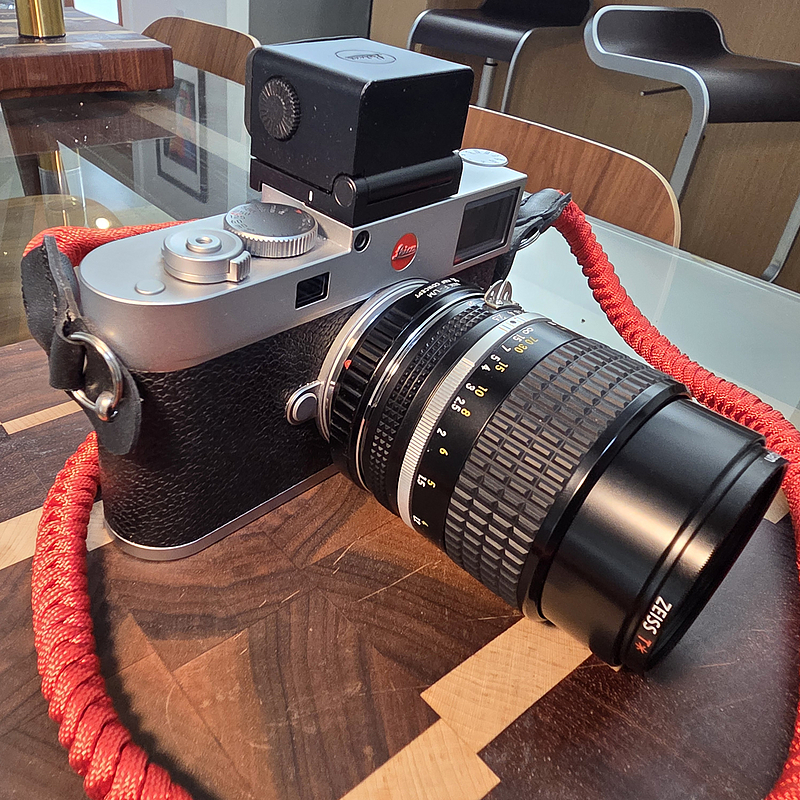 There is a specific kind of magic that happens when you mount a piece of legendary Nikon iron onto the digital pinnacle of the Leica M system. Following the success of our stress test with the 50mm f/1.2 AIS, it was only natural to turn our attention to its longer, more refined sibling, the Nikon 105mm f/2.5 AIS.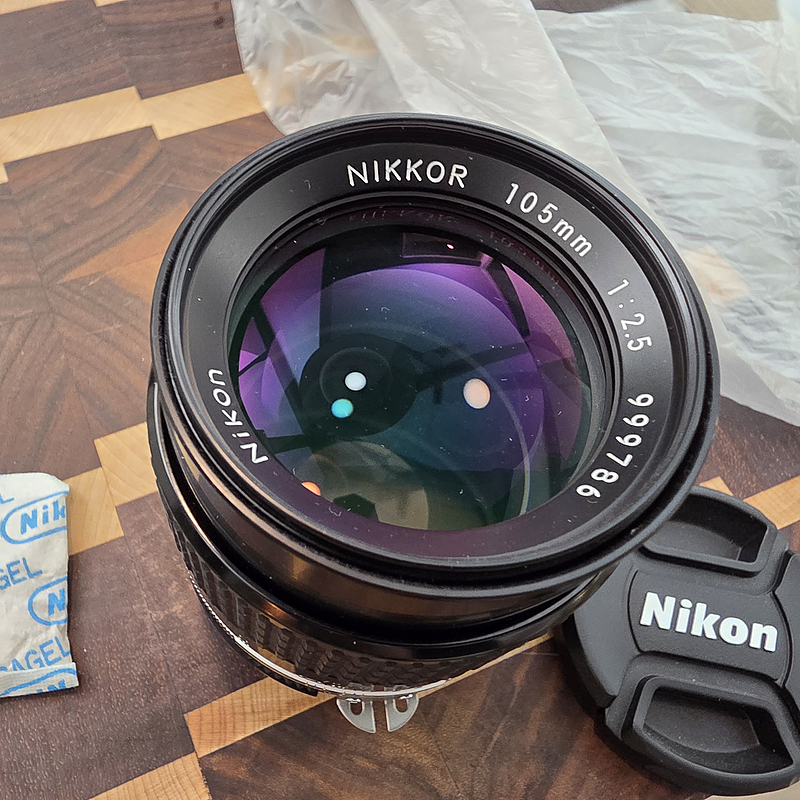


Support PureRangefinder.com — Our community is free for everyone. If you value what we do, you can help cover our server and development costs with a small one time or monthly donation.


Starting this test, I made a conscious decision to push the lens to its widest setting for every single frame. All the images you see in this review were shot at f/2.5. To be honest, the shooting conditions were far from ideal, the light was challenging, and in my excitement to finally use this newley found classic, I didn't always reach for the faster shutter speeds I probably should have.
There is also a technical hurdle to overcome when shooting a 105mm on a 60MP rangefinder body. To ensure the highest possible accuracy, I found myself relying heavily on the Visoflex. However, I actually had to turn off the focus peaking. While peaking is great for a quick glance, it can often obscure the fine details on a high resolution sensor. Disabling it allowed for a much better visual confirmation of the actual bite of the focus plane, which is essential when you're working with the shallow depth of field a 105mm provides.
The Restauraunt
This first portrait, captured earlier this afternoon in a local restaurant, is a perfect example of what this lens brings to the table. Despite the indoor lighting, the Nikon 105mm f/2.5 AIS handles the transition from the subject to the background with a grace that modern lenses often struggle to replicate.
Looking at the rendering of the facial hair and the textures of the hat, you can see that even at f/2.5, the lens isn't just soft, t's resolving a surprising amount of micro detail while wrapping it in that classic, low contrast vintage charm. The bokeh in the background is smooth and non distracting, creating a natural separation that pulls your eye directly into the subject's gaze. It’s an intimate, un staged look that validates why I decided to pull this lens from storage and put it back to work.
While the Leica M11 is a fantastic tool for technical stress testing, there is a certain undeniable synergy in pairing vintage Nikon glass with a modern Nikon body. In this second frame, my friend Ron is holding my Nikon Zf, the camera that has quickly become my daily driver for almost everything when my M11 is not with me.
There is nothing overly technical to break down in this shot, it’s simply a nod to the future. Very soon, the 105mm f/2.5 AIS will find its way onto this body via the FTZ adapter. While the Leica experiment is fascinating, the Zf feels like the natural home for this lens. The ergonomics and the shared DNA between the vintage F mount and the Zf's retro inspired design just make sense. It’s a pairing that values the experience of the shoot as much as the final image, and I’m looking forward to seeing how that 24MP sensor handles the character of this new old lens.
As we move from the restaurant into the open air, the variety of subjects will continue to shift. I never had a rigid plan for what to shoot today, I simply let the light and the city dictate the flow. This review is less of a curated gallery and more of a spontaneous exploration of how this lens handles the unpredictable world outside.
The Distance Test.
Moving further back to capture these flowers in their hanging basket provides a completely different perspective on the lens's character at f/2.5. At this distance, the 105mm's ability to compress a scene while still providing a distinct subject separation becomes very clear.
Even with a busier urban backdrop, the lens manages to blend the distant architecture into a soft, blur that doesn't compete for your eye. There is a gentle roll off in the focus here, the small white blossoms at the center have a delicate, natural sharpness, while the vines trailing off toward the street lose definition in a way that feels very organic. It isn't the clinical, razor sharp separation of a modern lens, it's something much more evocative.
To truly understand how the Nikon 105mm f/2.5 AIS behaves on the Leica M11, I wanted to recreate a specific perspective from my previous stress test with the 50mm f/1.2 AIS. This shop front scene in Battle Ground provides the perfect architectural backdrop to compare how these two vintage legends handle depth and detail.
While the 50mm offered a wider, more environmental view of this sidewalk, the 105mm completely transforms the geometry of the shot. By doubling the focal length, the background elements are pulled forward, creating a tight, compressed feel that emphasizes the texture of the hanging bell and the storefront signage.
Micro Detail vs. Atmospheric Glow
In this frame, again shot wide open at f/2.5, the lens shows its Sonnar esque roots. If you look at the weathered paint on the bell, there is a clear bite to the focus, the 60MP sensor is picking up the fine cracks and imperfections in the metal. However, just like the 50mm at its widest aperture, there is a gentle spherical aberration at play here that softens the high contrast edges of the white paint against the darker shadows.
The bokeh expansion here is remarkable. In the 50mm review, the distant streetlights remained smaller, more defined orbs. Here, the 105mm melts the background into large, overlapping circles of light and color, isolating the bell with a surgical precision that the wider lens couldn't match. It’s a testament to the idea that focal length, not just aperture, is the key to creating that separation that defines the vintage aesthetic.
In this next scene, I’m revisiting a specific composition I used during my Zeiss 35mm f/1.4 Distagon ZM review That lens is a modern masterpiece of clinical detail and biting contrast that remains virtually unmatched on the Leica M11. Comparing it to a forty year old Nikon prime might seem unfair, but the results from the 105mm f/2.5 AIS are surprisingly respectable.
Handling the Haze
Capturing the heart shaped detail on this railing finial, the differences in optical philosophy become apparent. Where the Distagon would have rendered this with punchy, near perfect global contrast, the Nikon shows its vintage DNA. The lighting conditions today were flat and challenging, which emphasizes the lens's tendency toward a softer, more muted tonal range when shot wide open at f/2.5.
That being said, the stress test isn't a failure by any means. While it could certainly benefit from a bit more contrast in post processing, the raw file captures a delicate level of detail in the artwork of the finial itself. The 60MP sensor is definitely working harder here than it would with modern Zeiss glass, but the tradeoff is that beautiful, circular bokeh in the background. Those golden orbs of light are smooth, lacking the clinical perfection that can sometimes make modern high performance lenses feel a bit sterile. But, I like Clinical Sharp Detail. It’s a reminder that while the Distagon may win on technical specs, the 105mm wins on pure, nostalgic soul.
Lets be frank, while I love the 105 and its rendering, when you compare it to the legendary Zeiss 35mm 1.4 Distagon for M, there are simply just no words to describe the difference. Yes, I know 105 vs 35. Totally different focal lengths. But, just look at this similar shot. It is Mind Blowing!
Continuing the walk through Battle Ground at f/2.5, this shot of a vintage bicycle leaning against a brick wall highlights how the 105mm f/2.5 handles complex textures. Much like the architectural details in my 35mm Distagon review, this scene is a test of how a lens balances micro contrast with a natural fall off.
Finding the Bite Amidst the Blur
In this frame, the focus is placed squarely on the rusted brake lever and the weathered handlebar grip. Despite the challenging light and my choice to keep the aperture wide open, the lens manages to resolve the fine pitting of the rust and the grain of the worn rubber with surprising clarity. I'm impressed! The 60MP sensor of the M11 is definitely pushing the glass here, but the result is a tactile, physical quality that feels far more grounded than the clinical output of a modern lens.
What is most impressive, however, is the transition. Look at how the woven basket in the foreground and the greenery in the background dissolve. The 105 creates a deep, layered sense of space, the basket doesn't just become blurry, it retains enough structure to provide context without distracting from the main subject. The background bokeh remains smooth and unobtrusive, a hallmark of the Sonnar style design that has made this lens a legend for decades. It’s another example of how this lens finds beauty in the mundane by simply getting out of the way and letting the character of the glass speak.
I had to stop by the coolest barbershop in Portland, Wun Two. Beyond the precision of their fades, the vibe in there is incredible. The crew is exceptionally welcoming and open to being photographed, making it an ideal spot to test the lens in a high energy, candid environment.
Soul Over Shutter Speed
This frame is a departure into monochrome. Again, I was shooting wide open at f/2.5 and, in the heat of the moment, I stuck with a slower shutter speed than was ideal for the movement of a working barber. However, the resulting image captures the gist of the experience perfectly.
The Nikon 105mm proves here that it isn't just a sitting portrait lens. In the black and white rendering, the slightly lower contrast of the vintage glass actually works in its favor, providing a smooth, film like tonality to the skin tones and the barber's tools. There is a sense of motion and life that clinical, modern sharpness sometimes kills. Even with the slight motion blur, the M11’s sensor pulls enough character from the scene to tell a real story. It’s the perfect end to a day of spontaneous shooting with a lens that spent far too many years waiting in a storage unit to finally see the light.
As the afternoon light shifted, I began to get a better feel for how things are working out with the 105. This shot of the garden obelisks is where everything started to click. After disabling the focus peaking to get a cleaner view through the Visoflex, I was able to nail the focus directly on the small hanging tag in the center of the frame.
This image immediately shows more punchy color and improved contrast compared to the flatter lighting of the earlier shots. The deep reds of the door in the background and the rich greens of the metalwork are rendered with a vibrancy that feels modern, yet grounded. It’s a great example of how this lens despite being a vintage find thats been hiding foir years, can still deliver the technical performance demanded by a modern camera when you take the time to focus carefully.
The way the 105 handles the string lights in the background is exactly why I decided to keep this lens instead of selling it. Those highlights melt into soft, creamy orbs that create a beautiful, layered depth. There’s a distinct transition from the sharpness of the hanging tag to the smooth, out of focus elements that modern just don't have. It proves that even at f/2.5, this lens is a powerhouse for isolating subjects in a busy environment.
What would a review on this site be without a guest appearance from my trusty model, Freya? This final frame captures the essence of why we adapt vintage glass to modern monsters like the M11.
At f/2.5, the 105 delivers a look that is undeniably sharp, yet never clinical. On a 60MP sensor, modern lenses often resolve every microscopic flaw with a harshness that can feel cold. This lens, however, renders Freya’s fur and the stillness of her gaze with a classic Nikon glow, a signature of its legendary optical formula that prioritizes the feeling of a photograph over raw data. It captures the texture of the moment without the digital edge that defines contemporary optics.
Don't Let Legends Gather Dust
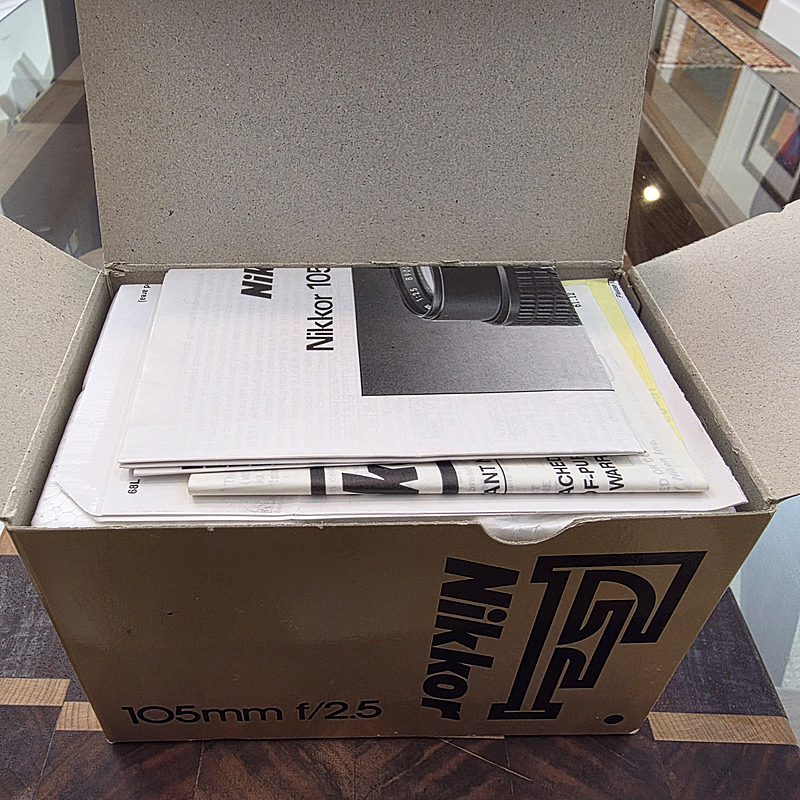
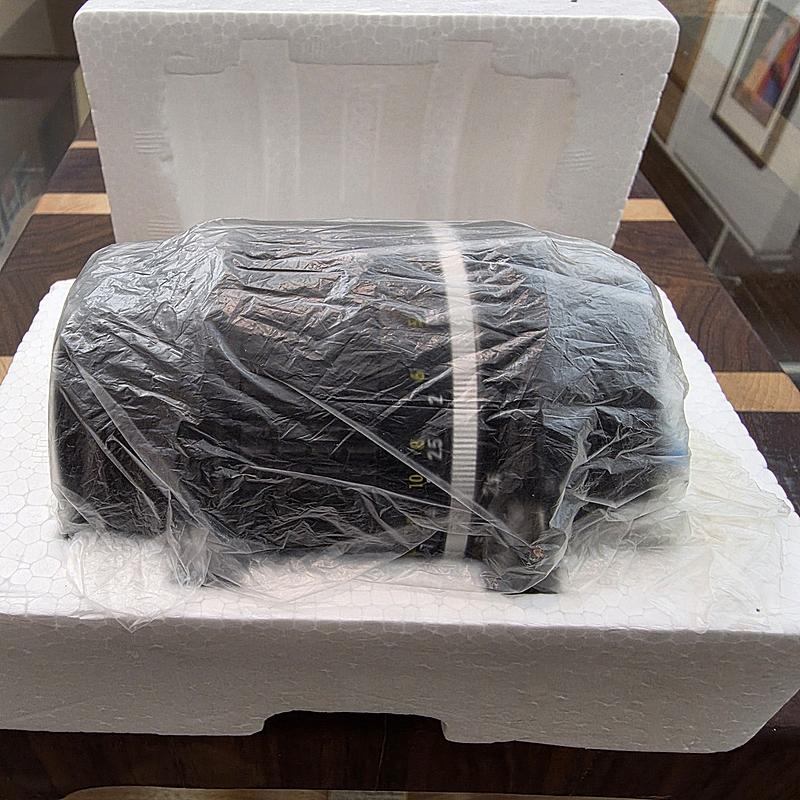
Looking at these results, I am still in disbelief that I let this lens sit forgotten in a storage unit for so long. How I managed to overlook a brand new, unused piece of heritage glass is beyond me, but I'm glad the search and rescue mission was a success.
If you have one of these sitting in a box, a drawer, or a storage unit of your own, put it to use. Whether you're mounting it on a rangefinder or a versatile daily driver like the Nikon Zf, this glass deserves to be in the light. It’s a reminder that sometimes the best way to move forward in digital photography is to take a giant step back into the archives and rediscover what makes an image memorable.