My relationship with manual glass is a tug of war between nostalgia and performance. While I appreciate "vintage character," I generally demand clinical, razor sharp rendering. I have little patience for "glow" when it’s just an excuse for poor wide open performance.
When I picked up the Voigtlander 50mm f/1.2 Nokton II from Cameraquest, I was skeptical. Generally speaking, fast primes including Leica often implies "soft until f/2.8." However, Voigtlander has a pretty solid record of delivering. So, after testing it on my Nikon Zf via the Techart TZM-02 autofocus adapter using my 13 year old German Shepherd, Freya, as a model I was genuinely impressed. The Voigtlander surpassed my expectations.
I am a stickler for contrast and resolution. Usually, f/1.2 glass carries a dreamy haze, but this Version II is a different animal:
Even at f/1.2, the sharpness is remarkable. It lacks the distracting spherical aberration of its predecessors.
Unlike many lenses that wash out wide open, this lens maintains rich blacks and deep tones even in challenging light.
Did I say auto focus ? Say hello to my litlle friend. Techart TZM-02
Adapting M mount glass to mirrorless often feels like a compromise, but the Techart TZM-02 changes everything. On the Nikon Zf, the experience is seamless. The adapter’s motor is snappy enough to make this beast of a lens feel like a native autofocus prime, even when utilizing eye tracking.
Comparing this to my 50mm f/2 APO Lanthar( THe benchmark ) the Nokton II holds its ground surprisingly well. That 12 blade diaphragm isn't just for show; it gives you three distinct renderings depending on where you click the ring.
At 1.2, the bokeh circles are perfectly round with no trace of the blades. It’s that classic melting background look.
At 1.4, you get a subtle sawtooth texture in the highlights. It’s not distracting, but it adds a bit of grit and character you won't find in a clinical lens.
At 2.0 is where things tighten up. The rendering becomes stable and consistent, moving toward that sharp, clinical look I personally prefer.
Voigtlander pulled off something impressive here. A lens that’s highly corrected but never feels sterile. It hits that sweet spot of high resolution bite at the focus point with a smooth a fall off. Honestly, on the Zf sensor, these files have a sense of depth that my native S lenses often miss.
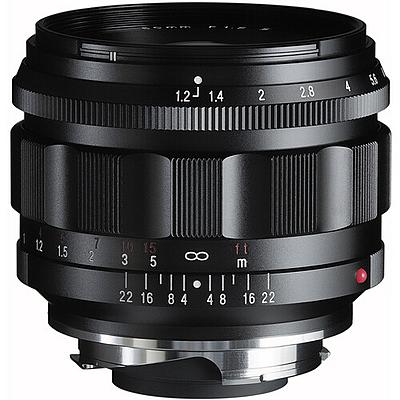
Of course, we can’t talk about an M mount lens without addressing the elephant in the room. While it performs brilliantly on the Nikon Zf with an autofocus adapter, this is what the Voigtlander 50mm f/1.2 Nokton II was truly designed for. A digital rangefinder like the Leica M11. In this case, my new glossy Black Paint M11 from Popflash Photo who has been my source of new and used Leicas gear for many years.
Mounting this lens on the M11 feels like a homecoming. This setup represents the classic, purist experience. No adapters, no motors, just you and the rangefinder patch. While the Zf offers the convenience of modern AF, there is a distinct tactile satisfaction in using the Nokton’s dampened, all metal focus ring to nail a shot manually.
The manual focus experience
The mages below were captured using 100% manual focus. On a high resolution sensor like the M11’s, there is absolutely nowhere for a lens to hide.
Shooting at f/1.2 on a rangefinder is a true test of skill. The depth of field is razor thin, and any slight movement from you or the subject can throw the focus off.
When you do nail it, the results are sublime. You get that same clinical sharpness on the eyelashes we saw earlier, but with the added soul that comes from the deliberate process of rangefinder focusing.
This Version II is even lighter (322g) and more balanced than the original, making it feel right at home on the M11 body without the front heavy feel of some faster 50mm glass.
While I love the versatility of the Nikon Zf setup, seeing the lens on the M11 reminds me why this particular glass is so special. It manages to bridge the gap between two very different shooting styles: the fast-paced world of modern mirrorless and the slow, intentional world of the rangefinder.
While the Nikon Zf setup is a modern marvel of convenience, we have to address the Elephant in the room. This, the Leica M11 is exactly what the Voigtlander 50mm f/1.2 Nokton II was built for. Moving from an autofocus adapter back to a 100% manual rangefinder experience changes the entire soul of the process.
The rendering in this black and white shot of Freya is, quite frankly, awesome. On the M11’s high resolution sensor, the lens has absolutely nowhere to hide.
Even shot wide open at f/1.2, the micro contrast is remarkable. You can see every detail in Freya's fur and the sharp focus on her eye, providing that clinical level of detail I crave. I really did get luck here with Frey remaining still. What a model 😁
There is a visceral satisfaction in nailing focus manually at f/1.2. Using the exceptional focusing mechanism of the Nokton II to align the rangefinder patch makes the final image feel earned.
The black and white conversion highlights the lens's ability to draw with light. The transition from the sharp plane of focus to the smooth, buttery bokeh is even more dramatic in monochrome, creating a timeless look that color sometimes obscures.
By the way, this particular image is a straight out of camera jpg saved as a monochrom render.
Like mentioned above, unlike a dedicated Monochrom camera, using the M11 gives me the flexibility of color while allowing me to dial in the exact black and white look I want in post processing. It’s about being in complete control of the final output and having a camera the can serve all needs. Not to mention, the $'s saved.
This combination of the M11 and the Nokton II is a reminder that while technology can make things easier, there is no substitute for the intentionality of a true manual focus experience. It’s a slower way to shoot, but when the rendering is this satisfying, it's worth every extra second.
To round things out, here is a follow up shot of Freya in color, captured natively on the Leica M11 at f/1.2.
Even wide open, the rendering is remarkably bitey. The M11 sensor brings out a richness in the coat and a clarity in the eyes that perfectly aligns with my preference for clinical sharpness. The fall off into the background remains smooth, proving that even without the convenience of the Zf's autofocus, this lens delivers a world class color image when you nail the focus manually. It’s a simple, direct testament to what this Version II of this glass can do on the high resolution sensor it was born for.
This shot moves away from the controlled environment of home and into the unpredictable light of the street. Captured with my M11 at f/2, this portrait of my son in his EDB hoodie is exactly why I’ve come to appreciate this Version II Nokton.
Even in this busy street scene, the rendering is incredibly satisfying.
At f/2 the subject is isolated with a 3D quality that feels intentional but not artificial. The contrast on his face and hair is remarkably sharp, once again, satisfying my preference for a clinical look.
The 12 blade diaphragm really shows its strength here. The background elements, the woman walking and the storefront are blurred into a smooth, readable texture that provides context without being distracting.
Nailing this shot with true manual focus on the M11 adds to the satisfaction. At f/2, you have a bit more breathing room than at f/1.2 but it still requires that deliberate rangefinder precision. This image confirms that the Nokton II isn't just a bokeh monster, it’s a sophisticated, highly corrected tool great for street photography as well.
To wrap up this review, this final shot captured at f/1.2 with my M11 perfectly embodies the spontaneous, candid nature of a fast prime.
In the monochrome profile, the shallow depth of field creates a beautiful sense of intimacy, isolating the subject's expression while the foreground and background dissolve into a pleasing blur. Despite the technical difficulty of manual focus at such a wide aperture, the Voigtlander 50mm f/1.2 II delivers exactly what I want. Clinical sharpness on the focal point with a sophisticated tonal roll off that only high quality glass can provide.
It’s a fitting end to this test, proving that whether on a modern Nikon Zf or a traditional M11, this lens is a versatile powerhouse that consistently exceeds expectations.
To conclude, I want to address the choice of imagery in this review. While the subjects and scenes I’ve shared might seem somewhat boring, repetative or everyday, they were chosen with a very specific intent. To demonstrate exactly what this lens can do when shooting fairly open.
By focusing on familiar textures the fine details of fur, the geometry of red berries, or the subtle expressions in a candid portrait the technical performance of the Voigtlander 50mm f/1.2 II becomes much easier to see. It’s in these simple moments that the lens's ability to balance clinical sharpness with a smooth fall off is most apparent. I didn't want the spectacle of a grand landscape or a stylized set to distract from the raw rendering power of the glass itself.
Whether it was the precision of the Nikon Zf setup with auto focus or the tactile soul of the M11, these images prove that even the most mundane subject can be transformed by optics this refined.
I looked at some of my apo lanthar photos at f2 and wanted to see how well this Nokton 1.2 II performed at f2 compared to the apo lanthar.
These are straight out of camera jpeg with Monochrome high contrast setting applied in camera.
I’ve just added several new frames to this review. I found myself revisiting some wide open shots from the 50mm APO Lanthar images that are almost ridiculously sharp. It prompted me to shoot a few more images of Freya today with the Nokton to see exactly how it measures up against what I consider the gold standard for 50mm glass.
The images below are Straight Out of Camera (SOOC) JPEGs from the Leica M11, utilizing the Monochrome High Contrast style.
While they aren’t quite Lanthar sharp, few things are, they are impressively close. In my estimation, the f2 performance of this Nokton comfortably surpasses the Leica Noctilux 50mm f/1.2 Reissue. It’s rare to find this much bite in a lens this fast.
I looked at some of my apo lanthar photos at f2 and wanted to see how well this Nokton 1.2 II performed at f2 compared to the apo lanthar.
These are straight out of camera jpeg with Monochrome high contrast setting applied in camera.
I looked at some of my apo lanthar photos at f2 and wanted to see how well this Nokton 1.2 II performed at f2 compared to the apo lanthar.
This time focus was on the ear edge.
These are straight out of camera jpeg with Monochrome high contrast setting applied in camera.
On most of these images, focus point was one of Freys eyes. In this particular shot, focus was on the ear. I wanted to see the amount of fine detail I can get there.
Shot wide open at f1.2. I personally believe this lens performs better than the Leica reissue asph 1.2 Noctilux. Focus was on eye.
These are straight out of camera jpeg with Monochrome high contrast setting applied in camera.
Lastly, here we go back to wide open at f1.2 for the following two images.
In my estimation, the wide open performance of this Nokton comfortably surpasses the Leica Noctilux 50mm f/1.2 Reissue. It’s rare to find this much bite in a lens this fast.
Shot wide open at f1.2. I personally believe this lens performs better than the Leica reissue asph 1.2 Noctilux. Focus was on eye.
These are straight out of camera jpeg with Monochrome high contrast setting applied in camera.
Use formatting shortcuts: [b]bold[/b], [i]italics[/i], [quote]quote[/quote], or [url=https://site.com]links[/url]. Paste a direct photo URL (.jpg, .png, .webp) or video link to embed it instantly.
Post
Reset/Cancel
Get your store banner on PureRangefinder.com Send us an email to support@purerangefinder.com
Stolen Gear Serial Lookup
Check camera and lens serial numbers against our global registry before buying used.
Support PureRangefinder.com — Our community is free for everyone. If you value what we do, you can help cover our server and development costs with a small one time or monthly donation.




Of course, we can’t talk about an M mount lens without addressing the elephant in the room. While it performs brilliantly on the Nikon Zf with an autofocus adapter, this is what the Voigtlander 50mm f/1.2 Nokton II was truly designed for. A digital rangefinder like the Leica M11. In this case, my new glossy Black Paint M11 from Popflash Photo who has been my source of new and used Leicas gear for many years.
Mounting this lens on the M11 feels like a homecoming. This setup represents the classic, purist experience. No adapters, no motors, just you and the rangefinder patch. While the Zf offers the convenience of modern AF, there is a distinct tactile satisfaction in using the Nokton’s dampened, all metal focus ring to nail a shot manually.
The manual focus experience
The mages below were captured using 100% manual focus. On a high resolution sensor like the M11’s, there is absolutely nowhere for a lens to hide.
Shooting at f/1.2 on a rangefinder is a true test of skill. The depth of field is razor thin, and any slight movement from you or the subject can throw the focus off.
When you do nail it, the results are sublime. You get that same clinical sharpness on the eyelashes we saw earlier, but with the added soul that comes from the deliberate process of rangefinder focusing.
This Version II is even lighter (322g) and more balanced than the original, making it feel right at home on the M11 body without the front heavy feel of some faster 50mm glass.
While I love the versatility of the Nikon Zf setup, seeing the lens on the M11 reminds me why this particular glass is so special. It manages to bridge the gap between two very different shooting styles: the fast-paced world of modern mirrorless and the slow, intentional world of the rangefinder.
The rendering in this black and white shot of Freya is, quite frankly, awesome. On the M11’s high resolution sensor, the lens has absolutely nowhere to hide.
Even shot wide open at f/1.2, the micro contrast is remarkable. You can see every detail in Freya's fur and the sharp focus on her eye, providing that clinical level of detail I crave. I really did get luck here with Frey remaining still. What a model 😁
There is a visceral satisfaction in nailing focus manually at f/1.2. Using the exceptional focusing mechanism of the Nokton II to align the rangefinder patch makes the final image feel earned.
The black and white conversion highlights the lens's ability to draw with light. The transition from the sharp plane of focus to the smooth, buttery bokeh is even more dramatic in monochrome, creating a timeless look that color sometimes obscures.
By the way, this particular image is a straight out of camera jpg saved as a monochrom render.
Like mentioned above, unlike a dedicated Monochrom camera, using the M11 gives me the flexibility of color while allowing me to dial in the exact black and white look I want in post processing. It’s about being in complete control of the final output and having a camera the can serve all needs. Not to mention, the $'s saved.
This combination of the M11 and the Nokton II is a reminder that while technology can make things easier, there is no substitute for the intentionality of a true manual focus experience. It’s a slower way to shoot, but when the rendering is this satisfying, it's worth every extra second.
Even wide open, the rendering is remarkably bitey. The M11 sensor brings out a richness in the coat and a clarity in the eyes that perfectly aligns with my preference for clinical sharpness. The fall off into the background remains smooth, proving that even without the convenience of the Zf's autofocus, this lens delivers a world class color image when you nail the focus manually. It’s a simple, direct testament to what this Version II of this glass can do on the high resolution sensor it was born for.
Even in this busy street scene, the rendering is incredibly satisfying.
At f/2 the subject is isolated with a 3D quality that feels intentional but not artificial. The contrast on his face and hair is remarkably sharp, once again, satisfying my preference for a clinical look.
The 12 blade diaphragm really shows its strength here. The background elements, the woman walking and the storefront are blurred into a smooth, readable texture that provides context without being distracting.
Nailing this shot with true manual focus on the M11 adds to the satisfaction. At f/2, you have a bit more breathing room than at f/1.2 but it still requires that deliberate rangefinder precision. This image confirms that the Nokton II isn't just a bokeh monster, it’s a sophisticated, highly corrected tool great for street photography as well.
In the monochrome profile, the shallow depth of field creates a beautiful sense of intimacy, isolating the subject's expression while the foreground and background dissolve into a pleasing blur. Despite the technical difficulty of manual focus at such a wide aperture, the Voigtlander 50mm f/1.2 II delivers exactly what I want. Clinical sharpness on the focal point with a sophisticated tonal roll off that only high quality glass can provide.
It’s a fitting end to this test, proving that whether on a modern Nikon Zf or a traditional M11, this lens is a versatile powerhouse that consistently exceeds expectations.
To conclude, I want to address the choice of imagery in this review. While the subjects and scenes I’ve shared might seem somewhat boring, repetative or everyday, they were chosen with a very specific intent. To demonstrate exactly what this lens can do when shooting fairly open.
By focusing on familiar textures the fine details of fur, the geometry of red berries, or the subtle expressions in a candid portrait the technical performance of the Voigtlander 50mm f/1.2 II becomes much easier to see. It’s in these simple moments that the lens's ability to balance clinical sharpness with a smooth fall off is most apparent. I didn't want the spectacle of a grand landscape or a stylized set to distract from the raw rendering power of the glass itself.
Whether it was the precision of the Nikon Zf setup with auto focus or the tactile soul of the M11, these images prove that even the most mundane subject can be transformed by optics this refined.
The images below are Straight Out of Camera (SOOC) JPEGs from the Leica M11, utilizing the Monochrome High Contrast style.
While they aren’t quite Lanthar sharp, few things are, they are impressively close. In my estimation, the f2 performance of this Nokton comfortably surpasses the Leica Noctilux 50mm f/1.2 Reissue. It’s rare to find this much bite in a lens this fast.
In my estimation, the wide open performance of this Nokton comfortably surpasses the Leica Noctilux 50mm f/1.2 Reissue. It’s rare to find this much bite in a lens this fast.